Episode 5 – Friends are Electric
In April 2022, I participated in one episode of a program of events called ANAT SPECTRA 2022: Multiplicity, hosted by the Australian Network for Art and Technology (ANAT) in partnership with the University of Melbourne, Science Gallery Melbourne, together with program partners The Things We Did Next (TTWDNext), Typecast Entertainment, RMIT University and Leonardo.
The program was curated by David Pledger in collaboration with a network of artists and thinkers and, in the wake of the global pandemic, was adapted as a limited series, hybrid event.
The curatorial proposition asked artists, scientists, technologists and researchers:
How do we imagine, experiment and produce in ways which create fair, just and sustainable futures for the human and non-human worlds?
SPECTRALive was a live event within the program, held in a hybrid/in-person format over three days in April 2022, honouring the global turn toward that new way of “presencing”. I appreciate their intention to “expose, explore and amplify the dynamics of the current epoch and to use our resources collectively and vividly to consider our respective places and possible futures” because I think it aligns, somehow, with what my research explores.
The in-person episode that I moderated on Day 1, Episode 5: Future Propositions – Friends are Electric, was held at Science Gallery Melbourne. I remember sitting watching the first session “Earth is in time on time” being thoroughly impressed by Cass Lynch and thinking, somewhat panicked, “Yikes. HARD act to follow. #Breathe #BlinkBlinkBlink #Gulp”. Anyway, follow I did, and fun I had.
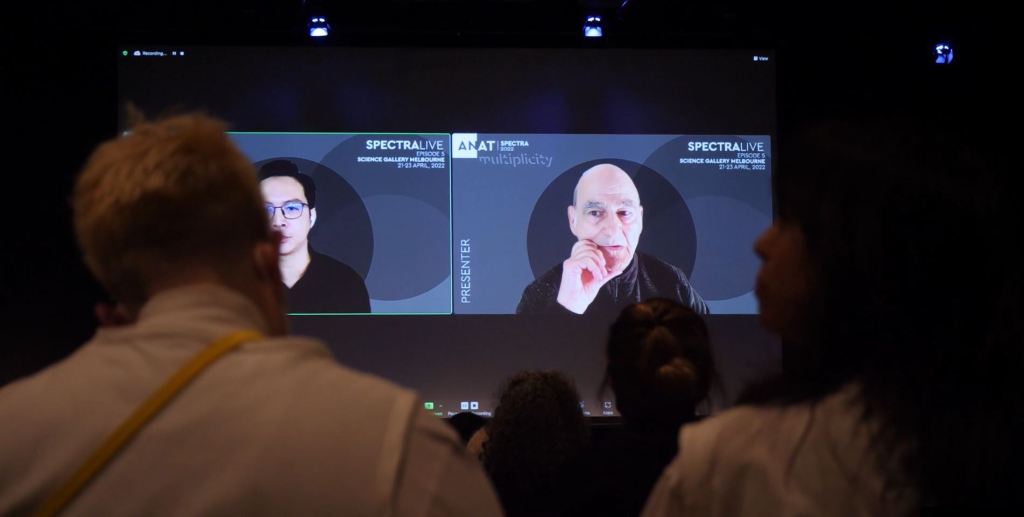
And how can one not have fun when one has the opportunity to learn about and then take a turn about the room with the national treasure – and at the time, Science Gallery Artist in Residence – that is STELARC? Here is a living testament to creative organisation, provocation and productivity. Not to mention an ability to face danger, fear, or vicissitudes with self-possession, confidence, and resolution; bravery.1
The fun is amplified when one has the opportunity to learn about and then yarn with Reggie Ba-Pe III, himself a creative force whose eyewatering CV reads like the yearbook of a glossy and well-established high-couture fashion magazine after a bloody good year. Another living testament.
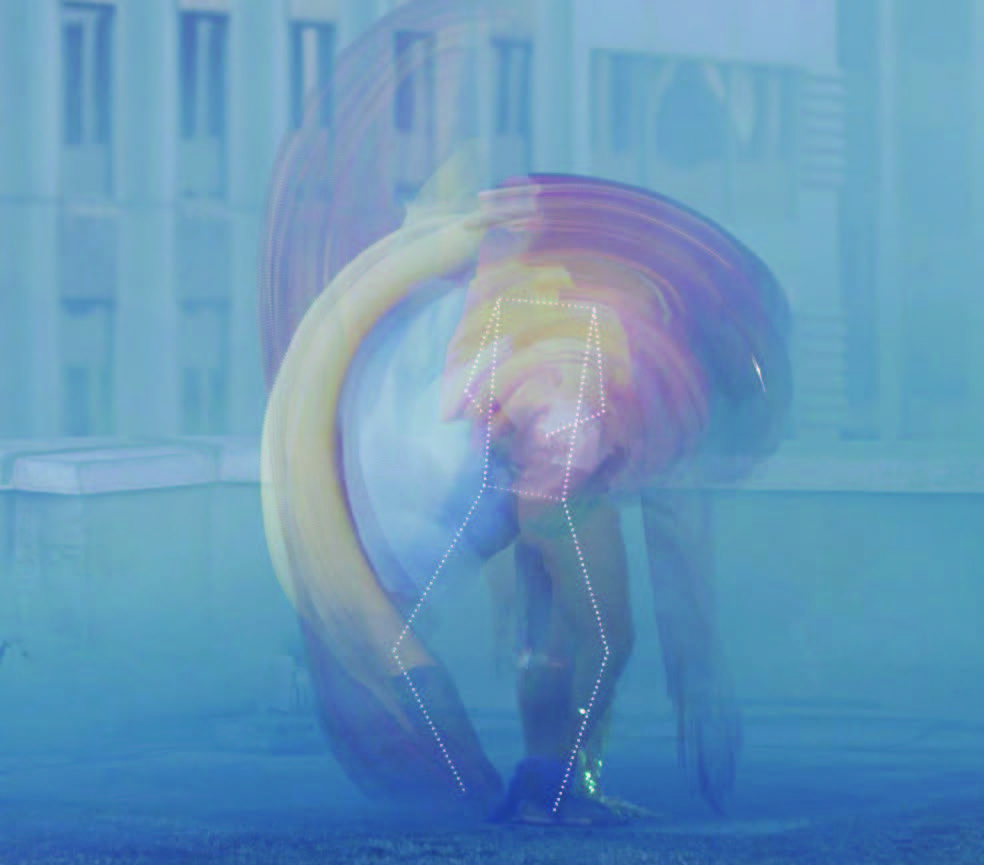
Of particular interest to me and informing the questions I wanted, as a moderator, to explore from the perspective of my research were Ba-Pe’s ventures Avastar and Club Media, and the digital beings Maie, and Ruby 9100M, particularly Screaming, and STELARC’s work Re-Wired / Re-Mixed: Event for Dismembered Body. I positioned these works and my own research in dialogue with the curatorial statement for one of the program’s featured artworks Machines like us cells like them.
All of these innovations, ventures, works, explorations, provocations and conversations, I believe, are situated within the broad field of transhumanism (among other fields). The values, principles and opinions that we bring to and attach to these innovations, deeming them as “wrong” or “right”, “good” or “bad” and so forth – are a product of our cultural values. The tensions and negotiations we are grappling with at this time in history, about how we use technology, and how we relate to and through technology are socially agreed upon. Those agreements in turn inform (and are informed by) regulation, social norms, markets and architecture as Lawrence Lessig discusses in his widely cited work Code.
This blog – and certainly my PhD – will weave together my thinking about that, and some of the theoretical (and sometimes completely non-theoretical) discussions and experiences that reflect what I have learned and am learning on this journey.2
For now, what I’m going to share in the absence of a link to the actual event, of which there is no online recording (and never was, to my knowledge), are the preparatory notes (see below) that I took with me on to the stage, where I sat in person in front of screens that projected for the audience the online live presences of Reggie and STELARC. Sadly, their responses – which were rich, dense and inspiring – are not available to me, and thus you at this time. Perhaps that will change in time, but for now, you might like to imagine what their responses might have been.
Even now, more than two years later when I look back at the program, and the sheer intellectual and creative power that came together to create ANAT SPECTRA: Multiplicity 2022, I marvel at the honour of being invited to participate. It was truly humbling, and I’m grateful to everyone who had a hand in making that opportunity available to me. I hope that by reflecting on that opportunity, I can blow some warmth toward that past-which-is-always-present (digitally or otherwise) so that I might be more present in the future-now that we co-created (digitally or otherwise).
- Definition of “courage” sourced from The American Heritage® Dictionary of the English Language, 5th Edition. Accessed 2 Sep 2024. ↩︎
- Evidently, I might write about it two years after the event, and I may need to absolutely gloss over the ideas because I’m slightly pressed for time and playing catch-up. (Please permit me to gloss at times, and be assured that I know I’m glossing. Or, it may be that I’m partway through a learning process.) ↩︎

 Escritoire Noir